StillPoint Schoolhouse Store
Monday, March 7, 2011
Sweet Vegetable Stew
A long winter and an abundance of delicious recipes brings me back to writing them down for your enjoyment. This past Sunday I fed a large group of Body Rejuvenation Cleanse practitioners as they gathered to begin the Transition Phase of the Cleanse. Something sweet, warm and hearty was called for to help ease the sugar cravings and demonstrate how eating sweet vegetables can be very satisfying.
I served the stew with basmati brown rice, and a topping of creamy silken tofu flavored with lemon juice and enough nutritional yeast to provide a cheese flavor. As a side I served broccoli raab topped with sauteed garlic in olive oil and a fresh green salad tossed with a light vinaigrette dressing. All in all a delightful and educational afternoon spent with a wonderful group of people enjoying a healthy meal and intelligent conversation.
Sweet Vegetable Stew
Serves 6
2 tablespoons olive oil
1 tablespoon cumin seeds
1 onion, chopped
3 clove garlic, minced
1" piece ginger, peeled, diced
1 teaspoon cumin powder
1 teaspoon coriander powder
1 teaspoon garam masala (combination of Indian herbs and spices)
2 cups sweet potato, peeled, cubed
1 carrot, chopped
1 parsnip, peeled, chopped
2 cups kabucha squash, peeled, cubed
2 cups vegetable stock
1 cup sweet white wine
1 14.5 ounce can diced tomatoes
1 14.5 ounce can chunky tomato sauce
1 can black beans, rinsed
1 teaspoon sea salt or to taste
1. In a large dutch oven heat the oil and fry the cumin seeds until aroma is released, about 1 minute. 2. Add the onion, garlic and ginger and sauté until onion is tender about 3 minutes, stirring often.
3. Add the cumin and coriander powder and garam masala and stir well, cooking until aroma is released, about 1 minute.
4. Add the sweet potato, carrot, parsnip and squash to onion herb mixture and stir well. Add the stock, wine and both cans of tomatoes, stir well and bring to a simmer.
5. Add the black beans and sea salt, return to simmer, cover and allow to cook until squash and carrots are tender, about 1 hour. Use a flame deflector under the pot for even distribution of the heat.
Serve over basmati brown rice with a dollop of Tofu Cream.
Tofu Cream
Makes 2 cups
16 ounces organic silken tofu
Juice of 1 lemon
2 tablespoons nutritional yeast
½ teaspoon Ume Plum vinegar or sea salt
Place all ingredients in a food processor and puree until smooth. Refrigerate until ready to use.
Saturday, November 27, 2010
Holiday Sweet and Savory
The day before Thanksgiving found me debating the merits of sweet potatoes with the lovely young woman who manages Race's Farm stand. She prefers the sweet reds and I was going on about the Japanese white sweet potato, especially when roasted as oven fries. Arriving home I decided to put the two to the test. The result was not your usual sweet potato dish for Thanksgiving; I even threw in a parsnip to make things more interesting. Hey, I figured, why not take a walk on the wild side and toss the lot with a toasted walnut oil, a sprinkle of sea salt and roast them in the oven at 400 degrees. Once they emerged I could see they were just begging for some grated Peocorino Romano and that's just what they needed to tie the sweet with the savory.
As for which one tasted better, that is up to how you like your tators done. The reds are more tender and a bit more sweet than the Japanese, which is slightly more dry with just the right amount of sweetness. Together it was the perfect marriage and then that rogue parsnip shows up to distract your taste buds. With the leftovers I added a serving to a bowl of homemade Turkey Brown Rice soup and with a green leafy salad sighs of contentment rang through the house.
Sweet and Savory Sweet Potatoes
Serves 6-8
1 large Japanese white sweet potato
1 large sweet red potato
1 medium to large parsnip
1/4 cup toasted walnut oil
Sea salt to taste
Pecorino Romano cheese
1. Preheat oven to 400 degrees.
2. With a mandolin or by hand cut the sweet potatoes and parsnip into french fry shapes. Spread onto a baking sheet.
3. Pour the oil over the potatoes and toss with your hands or spatula to coat. Sprinkle with salt and place in the oven.
4. Roast for 40 minutes, stirring the potatoes at least once during the cooking time.
5. Remove from oven when done and place in a large bowl. Add the grated Romano and toss well to combine. Adjust salt if needed and serve warm.
Wednesday, October 27, 2010
Autumn Vegetable Salads
Butternut Apple Salad
Fall has arrived in the northeast and with it comes winter squash in all its glory. Nothing better than a roasted vegetable salad combined with nuts and greens, both raw and cooked. Simple and easy to make these kinds of salads can be made from dinner leftovers and just tossed with a mildly sweet vinaigrette. For this particular recipe I was inspired by the crisp Macoun apples, buttercup squash, fresh beets and their greens. Nothing like beet greens to move me to rapturous tears. Not sure what that says about me, but I just love the taste of fresh greens. I served it for the Transition Phase of the Body Rejuvenation Cleanse and everyone loved it. It is a great meal to take for lunch the next day.
The Buttercup Edamame Rice Salad was created for my recent Herbs and Spices cooking class. Even with the time it took to peel the buttercup squash it was worth the labor. Feel free to substitute butternut or another winter squash in either of these recipes. You can also cut your work time in half and buy frozen cubed winter squash and roast them instead. Opt for the organic brands to eliminate any chemicals from the recipe.
2 cups Butternut squash, peeled and cubed
1 ½ cups fresh beets, peeled and cubed
1 firm crisp apple, cored and cubed
1 cup fennel bulb, cut into thin strips
2 cups beet greens, cooked and chopped
Boston Bibb lettuce or Arugula
Dressing
1/3 cup extra virgin olive oil
1/2 tsp. Ume Plum vinegar or sea salt
3 Tbs. golden balsamic vinegar
1 Tbs. maple syrup or pinch of stevia powder
1/4 cup whole almonds, toasted
1. Preheat oven to 375 degrees. Spray a baking pan with oil.
2. Toss butternut cubes and beets with 2 tablespoons of oil and arrange on pan. Bake until tender and slightly browned, about 30 minutes. Remove from oven when done and cool.
3. On a separate baking sheet toss the apple and fennel with 2 tablespoons of oil and arrange on pan. Bake until tender, about 20 minutes. Remove from oven when done and cool.
4. Whisk together the remaining oil with vinegar and maple syrup and set aside.
5. In a medium bowl combine the squash, beets, apple and fennel turning gently.
6. Place Boston Bibb lettuce or arugula on individual salad plates and spoon the salad over the greens. 7. Top with the dressing and toasted almonds and serve.
Edamame Buttercup Rice Salad
Serves 4
2 cups Edamame
2 cups Buttercup squash, peeled and cubed
1 ½ cups cooked brown rice
1/3 cup currents
1/4 cup toasted sesame seeds
1/4 cup sesame oil
2 Tbs. toasted sesame oil
1/2 tsp. Ume Plum vinegar or sea salt
3 Tbs. brown rice vinegar
¼ cup fresh parsley, minced
¼ cup fresh basil, minced
1. Preheat oven to 375 degrees. Spray a baking pan with oil.
2. Toss buttercup cubes with 2 tablespoons of sesame oil and arrange on pan. Bake until tender and slightly browned, about 30 minutes.
3. Meanwhile, bring a pot of water to water and cook frozen edamame until tender, about 5 minutes.
4. Whisk together the dressing ingredients and set aside.
5. In a medium bowl toss everything together with the dressing and serve on a bed of fresh Arugula.
Fall has arrived in the northeast and with it comes winter squash in all its glory. Nothing better than a roasted vegetable salad combined with nuts and greens, both raw and cooked. Simple and easy to make these kinds of salads can be made from dinner leftovers and just tossed with a mildly sweet vinaigrette. For this particular recipe I was inspired by the crisp Macoun apples, buttercup squash, fresh beets and their greens. Nothing like beet greens to move me to rapturous tears. Not sure what that says about me, but I just love the taste of fresh greens. I served it for the Transition Phase of the Body Rejuvenation Cleanse and everyone loved it. It is a great meal to take for lunch the next day.
The Buttercup Edamame Rice Salad was created for my recent Herbs and Spices cooking class. Even with the time it took to peel the buttercup squash it was worth the labor. Feel free to substitute butternut or another winter squash in either of these recipes. You can also cut your work time in half and buy frozen cubed winter squash and roast them instead. Opt for the organic brands to eliminate any chemicals from the recipe.
Butternut Apple Salad
Serves 62 cups Butternut squash, peeled and cubed
1 ½ cups fresh beets, peeled and cubed
1 firm crisp apple, cored and cubed
1 cup fennel bulb, cut into thin strips
2 cups beet greens, cooked and chopped
Boston Bibb lettuce or Arugula
Dressing
1/3 cup extra virgin olive oil
1/2 tsp. Ume Plum vinegar or sea salt
3 Tbs. golden balsamic vinegar
1 Tbs. maple syrup or pinch of stevia powder
1/4 cup whole almonds, toasted
1. Preheat oven to 375 degrees. Spray a baking pan with oil.
2. Toss butternut cubes and beets with 2 tablespoons of oil and arrange on pan. Bake until tender and slightly browned, about 30 minutes. Remove from oven when done and cool.
3. On a separate baking sheet toss the apple and fennel with 2 tablespoons of oil and arrange on pan. Bake until tender, about 20 minutes. Remove from oven when done and cool.
4. Whisk together the remaining oil with vinegar and maple syrup and set aside.
5. In a medium bowl combine the squash, beets, apple and fennel turning gently.
6. Place Boston Bibb lettuce or arugula on individual salad plates and spoon the salad over the greens. 7. Top with the dressing and toasted almonds and serve.
Edamame Buttercup Rice Salad
Serves 4
2 cups Edamame
2 cups Buttercup squash, peeled and cubed
1 ½ cups cooked brown rice
1/3 cup currents
1/4 cup toasted sesame seeds
1/4 cup sesame oil
2 Tbs. toasted sesame oil
1/2 tsp. Ume Plum vinegar or sea salt
3 Tbs. brown rice vinegar
¼ cup fresh parsley, minced
¼ cup fresh basil, minced
1. Preheat oven to 375 degrees. Spray a baking pan with oil.
2. Toss buttercup cubes with 2 tablespoons of sesame oil and arrange on pan. Bake until tender and slightly browned, about 30 minutes.
3. Meanwhile, bring a pot of water to water and cook frozen edamame until tender, about 5 minutes.
4. Whisk together the dressing ingredients and set aside.
5. In a medium bowl toss everything together with the dressing and serve on a bed of fresh Arugula.
Tuesday, July 6, 2010
Recipes To Support Lung-Large Intestine
What a great week of friends visiting from out of town bringing with them new ideas, recipes, inspiration and information. Laura and Linda arrived from Hawaii and California eating a fairly strict Macrobiotic diet as prescribed by Warren Kramer. Warren is a highly respected Macrobiotic counselor who travels the country teaching and counseling those fortunate enough to make his acquaintance. The ladies brought along recipes he had given them, that made their way into my Foods for Lung-Large Intestine cooking class and I happily share a few of them with you here.
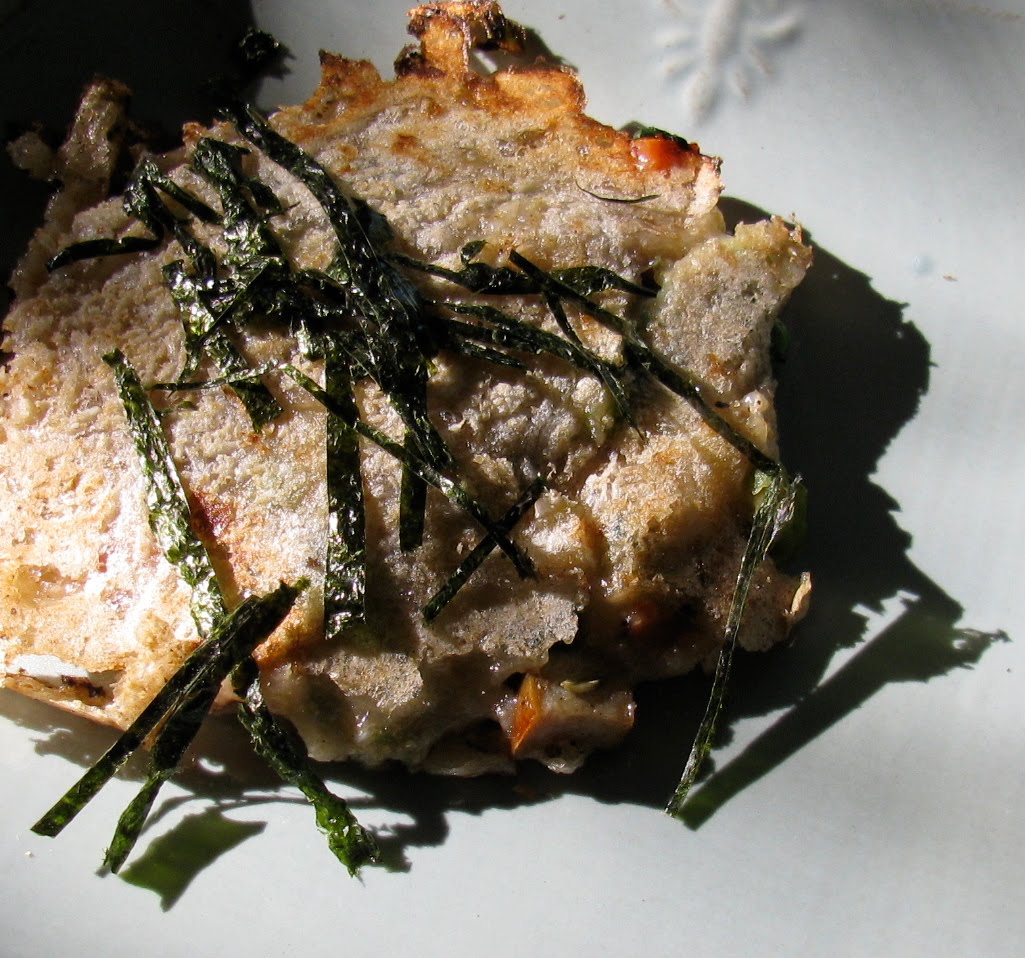
The first one is a Mochi Vegetable Pancake, which I did not know you could make so easily. It turned out to be delicious, and to make the preparation go more quickly I used frozen organic vegetables and sauteed them with fresh onion and shitake mushrooms in sesame oil. I served a few toppings on the side such as a coriander chutney, some fresh pesto, and a simple dipping sauce of tamari, ginger juice, mirin and water.
For those of you wondering what foods support the Lung/Large Intestine you will have to wait for the workshop to come round again in the fall, however I will tell you that pungent taste and the color white are beneficial for these organs. Daikon radish, rice, and mochi are examples of supportive foods and to that end I have used them in these two recipes.
Mochi and Vegetable Pancake
Serves 2
Toasted sesame oil * 1/2 onion, thin half moons * 3 shitake mushrooms, sliced * 1 cup frozen mixed vegetables * ½ lb. plain mochi, coarsely grated * Umeboshi vinegar * sea salt * 2 tablespoons tamari * 1 tablespoon water * ½ teaspoon ginger juice * ½ teaspoon mirin
1. Heat a small amount of oil in a skillet. Sauté the onion for 2 minutes. Add the shitakes and a pinch of sea salt. Add the frozen vegetables and sauté another 2 minutes. Add enough water to coat the bottom of the skillet, cover, reduce the flame to low, and simmer 3-4 minutes, until vegetables are tender.
2. Remove the cover, sprinkle a few drops of umeboshi vinegar. Cook another minute or so. Remove the vegetables and place in a bowl.
3. In a heated cast-iron skillet, place about 1/8-1/4 cup of grated mochi. Place 1-2 tablespoons of sautéed vegetables. Next, sprinkle a little more grated mochi on top of the veggies to create a sandwich. Cook on each side until slightly golden. The mochi will melt, completely encasing the vegetables and puff up slightly. Remove and place on a serving platter.
4. In a small bowl combine the tamari, water, ginger and mirin. Spoon into dipping bowls and serve with the pancakes.
Boiled Daikon with Sweet Miso Sauce
Serves 2
1 daikon * ¼ cup rice syrup * 1/8 cup sweet miso * 1/8 cup tahini * chives
1. Cut daikon into large rounds (1/2” thick). Place daikon in a saucepan of boiling water for 7 minutes, until tender.
2. In a small saucepan heat the sweet miso and tahini, stirring well, then stir in the rice syrup.
3. Serve daikon on individual plates topped with a teaspoon of the tahini sauce. Garnish with the chives.
Sunday, June 20, 2010
Farmers Market Pesto Bonanza!
What a great time I had at the opening of the Blairstown Farmers Market yesterday. Set up in the Foodshed Alliance booth I featured 3 delicious recipes you can create with Garlic Scapes. Godelewsky Farms had plenty on hand to sell and once the crowd sampled the goods they were soon sold out.
The first recipe was a classic Basil-Parsley-Garlic Scape pesto using no nuts or cheese, just a good quality extra virgin olive oil, a dash of sea salt and the herbs take care of the flavor. I had cooked up a big pot of chickpeas to make a garlic scape bean spread and was not disappointed with the results. And finally, with some left over garlic scapes and a bunch of both cilantro and parsley, I whipped together another pesto that had the crowd rolling their eyes in sweet delight. With no further ado I offer you the recipes.
Garlic Scape Pesto
2 cups garlic scapes, chopped
2 large handfuls fresh parsley, washed and dried
2 cups fresh basil (lemon basil adds a nice touch)
1/2 tsp. sea salt
1/2 to 1 cup extra virgin olive oil
1. In a food processor chop the scapes into a fine mash.
2. Add a 1/4 cup of the oil and puree.
3. Add the parsley and pulse to combine.
4. Add the basil and pulse to combine, adding more oil as needed.
5. Add the sea salt and keep the machine running while you drizzle the oil in through the chute.
6. Stop from time to time to scrape down the sides then continue to puree until it is a smooth consistency.
A note on Garlic Scapes: these are the flowering stems that grow out of the garlic bulb. Some people call them garlic curls and they have a short season for enjoying. This makes them all the more precious and can be used in a stir-fry, dressings, to flavor oil, or to make into a pesto. They are aromatic and pungent at the same time, so no need to add extra garlic to kick the taste up a notch.
Garlic Scape Hummus served in a Romaine Lettuce Leaf
Yields 11/2 cups Time: 15 minutes
1/3 cup sliced garlic scapes (3 to 4)
1 tablespoon freshly squeezed lemon juice, more to taste
1 cup fresh parsley, washed and dried
1/2 teaspoon coarse sea salt, more to taste
1 can (15 ounces) Garbanzo beans, rinsed and drained (Any white bean will work.)
1/3 cup extra virgin olive oil, more for drizzling
1. In a food processor, process garlic scapes with lemon juice, parsley and salt until finely chopped. Add beans and process to a rough purée.
2. With motor running, slowly drizzle olive oil through feed tube and process until fairly smooth. Pulse in 2 or 3 tablespoons water, or more, until mixture is the consistency of a dip. Add more salt, pepper and/or lemon juice, if desired.
3. Spread out dip on a plate, drizzle with olive oil, and sprinkle with more salt if desired.
Cilantro Parsley Pesto
Yields 11/2 cups
4 garlic scapes, roughly chopped
4 cups cilantro, washed and dried. (Tops, but some stem is fine)
3 cups parsley, washed and dried. (Again, some stem is fine)
1/2 cup cooked chick peas
1/3 cup chick pea liquid
1/3-1/2 cup extra virgin olive oil
2 teaspoons white balsamic vinegar
1 teaspoon sea salt or to taste
1. In a food processor, process garlic scapes until finely chopped. Add cilantro, parsley and chickpeas and vinegar and process to a rough purée.
2. With motor running, slowly drizzle olive oil through feed tube and process until fairly smooth. Pulse in 2 or 3 tablespoons of the chickpea liquid, or more, until mixture is the consistency of a dip. 3. Spread out dip on a plate, drizzle with olive oil, and serve on chunks of whole grain country bread, or use a raw sugar snap pea and scoop up a mouthful.
Tuesday, May 18, 2010
A Marriage of Earth and Sea
In between bursts of chilly spring rain and hints of summer heat there have been moments of sublime warmth where I am moved to marry two of my favorite foods together. Sweet, tart apples and salty sea rich dulse. You may not think this is a marriage made in heaven, but we are not in heaven, but here with our feet planted, for some, firmly on the ground awaiting the next apple to fall from the trees.
Apples are a food gifted to us by the gods. They help to protect brain cells from free radical damage, while working to lower your bad cholesterol to tolerable levels. They are sited to help prevent a whole slew of cancers, plus they are sweet and delicious. Eat them fresh or cooked in dessert recipes the simple apple will serve you well.
On the other end of the spectrum you find the sea vegetable known as Dulse. High in potassium, iron, B6 and B12, dulse can be used in soups, fried to make chips or sprinkled on grains and salads in the form of dulse flakes. It is mild in taste and low in sodium. I love the Maine Coast Sea Vegetable Dulse that comes right out of the waters off the coast of Maine. This salad is a great way to introduce yourself to this nutritious vegetable. I hope you enjoy.
Waldorf Salad w/Dulse
Serves 6
1 head red leaf lettuce, chopped or broken into pieces
1/3 cup Dulse flakes
2 apples, cored and cut into chunks
3 grated carrots
1 cup chopped celery
1 cup red grapes, halved
1/4 cup minced red onion
1/2 cup chopped toasted walnuts
1/3 cup raisins or dried cranberries (optional)
Dressing:
1/4 cup extra virgin olive oil
2 tablespoons apple cider vinegar
1 teaspoon honey or agave syrup
½ teaspoon Ume Plum vinegar or sea salt
1 teaspoon Dijon mustard
½ teaspoon garlic powder
1. In a large salad bowl whisk together the dressing ingredients.
2. Add the salad ingredients and toss with the dressing.
3. Arrange on individual plates and serve.
Apples are a food gifted to us by the gods. They help to protect brain cells from free radical damage, while working to lower your bad cholesterol to tolerable levels. They are sited to help prevent a whole slew of cancers, plus they are sweet and delicious. Eat them fresh or cooked in dessert recipes the simple apple will serve you well.
On the other end of the spectrum you find the sea vegetable known as Dulse. High in potassium, iron, B6 and B12, dulse can be used in soups, fried to make chips or sprinkled on grains and salads in the form of dulse flakes. It is mild in taste and low in sodium. I love the Maine Coast Sea Vegetable Dulse that comes right out of the waters off the coast of Maine. This salad is a great way to introduce yourself to this nutritious vegetable. I hope you enjoy.
Waldorf Salad w/Dulse
Serves 6
1 head red leaf lettuce, chopped or broken into pieces
1/3 cup Dulse flakes
2 apples, cored and cut into chunks
3 grated carrots
1 cup chopped celery
1 cup red grapes, halved
1/4 cup minced red onion
1/2 cup chopped toasted walnuts
1/3 cup raisins or dried cranberries (optional)
Dressing:
1/4 cup extra virgin olive oil
2 tablespoons apple cider vinegar
1 teaspoon honey or agave syrup
½ teaspoon Ume Plum vinegar or sea salt
1 teaspoon Dijon mustard
½ teaspoon garlic powder
1. In a large salad bowl whisk together the dressing ingredients.
2. Add the salad ingredients and toss with the dressing.
3. Arrange on individual plates and serve.
Sunday, May 2, 2010
Cous Cous Salad
Here is another delicious recipe from the last Macrobiotic cooking class and one of my favorite warm weather salads. It takes so little time to make that you will have no choice but to include this as a staple in your weekly menu planning. I love the complexity of sweet and sour flavors with the pungent bite of scallion and the cool crisp crunch of fresh cucumber.
Feel free to use your favorite vegetables in this salad, but replacing the tiny currents with raisins may be to much. On the other hand, dried cranberries would make a tart replacement and may as well throw in a few toasted pine nuts while you're at it.
Serves 6
2 cups organic couscous
2 cups water
1/3 cup currents
1 cup carrot, grated
1/2 cup cucumber, peeled, seeded and diced
3 green onions, diced
Lemon Dressing
Juice of 1 lemon (about 2 tablespoons)
Juice of 1 lime (about 2 tablespoons)
¼ cup extra virgin olive oil
1 teaspoon Ume Plum vinegar or 1/2 teaspoon fine sea salt
1 teaspoon sweetener of choice (I use a pinch of stevia powder)
2 tablespoons brown rice vinegar
1. Bring 2 cups water to a boil, add the couscous and stir. Cover and turn the flame off.
2. Allow the couscous to steam for 5 minutes. Remove and fluff with a fork to cool.
3. Add the currents while still warm and the other vegetables once cous cous has cooled.
4. Whisk together the dressing ingredients and toss with the cous cous. Let sit for 10 minutes to better absorb the flavors.
Subscribe to:
Posts (Atom)